When you visit the doctor, you’ve probably been asked these questions:
- “Is there any family history of similar illness?”
- “Do your parents or grandparents have diabetes, high blood pressure, or cancer?”
- “Anyone in the family die early?”
Many patients think this is just routine and answer casually. But this information is crucial for doctors’ diagnosis, screening, and prevention.
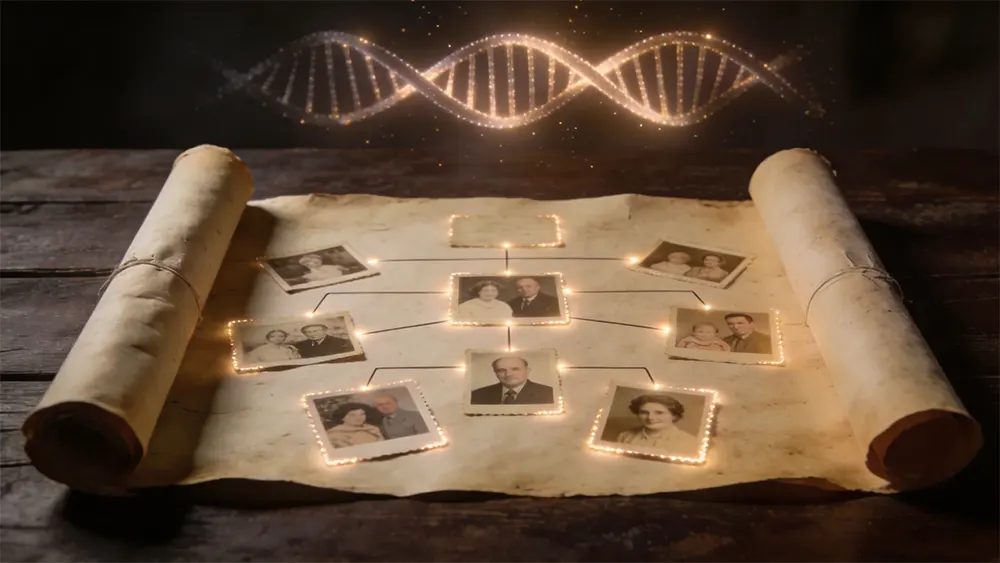
The source of this information is a complete family health archive — essentially a family tree that records health information.

1. Why Do Doctors Ask About “Family History”?
Because many diseases cluster in families.
“Familial clustering” means the incidence of certain diseases in the same family is significantly higher than the general population. This usually involves genetic factors + shared living environment working together.
Genetic vs Shared Environment:
| Type | Examples | Proportion |
|---|---|---|
| Pure genetic | Cystic fibrosis, Huntington’s disease, Marfan syndrome | Determined by single gene |
| Mainly genetic | Type 1 diabetes, breast cancer (BRCA gene), familial hypercholesterolemia | Genetics 60-80% |
| Genetic + environment | Type 2 diabetes, hypertension, obesity, some cancers | Genetics + diet/lifestyle |
| Mainly environmental | Infectious diseases, malnutrition | Familial clustering from shared environment |
Doctor’s logic: know your family history → judge if you have higher risk → choose earlier, more intensive screening.
2. Which Diseases Cluster in Families?
Below is a list of common familial clustering diseases (important: not diagnoses, just reference):
Chronic Diseases
| Disease | Family Risk | Recommended Screening |
|---|---|---|
| Type 2 Diabetes | First-degree relative risk increases 2-6x | Annual fasting glucose, HbA1c after 35 |
| Hypertension | Both parents with hypertension: 45% risk in children | Annual blood pressure after 18 |
| Hyperlipidemia | Familial hypercholesterolemia (FH) high incidence | Lipid panel every 3-5 years after 20 |
| Coronary heart disease | First-degree relative risk increases 2-3x | ECG, coronary CT after 40 |
| Obesity | Both parents obese: 80% obesity rate in children | Continuous BMI monitoring |
Cancers
| Cancer | Family Risk | Recommended Screening |
|---|---|---|
| Breast cancer | BRCA1/2 carriers 5x risk | Annual breast ultrasound/mammogram after 30 |
| Colorectal cancer | Lynch syndrome family 5-10x risk | Colonoscopy every 5 years after 40 |
| Gastric cancer | Positive family history 2-3x risk | Gastroscopy every 3 years after 40 |
| Lung cancer | Smoking + family history multiplies risk | Annual low-dose CT after 50 |
| Liver cancer | Hepatitis B + family history high risk | AFP + liver ultrasound every 6 months |
| Prostate cancer | First-degree relative 2x risk | Annual PSA after 50 |
Mental/Neurological Diseases
| Disease | Family Risk |
|---|---|
| Depression | First-degree relative 2-3x risk |
| Bipolar disorder | Monozygotic twin concordance 40-70% |
| Alzheimer’s | First-degree relative 1.5-2x risk |
| Parkinson’s | Positive family history 2x risk |
| Epilepsy | Some types have genetic tendency |
| Schizophrenia | Monozygotic twin concordance ~50% |
Others
| Category | Diseases |
|---|---|
| Autoimmune | Lupus, rheumatoid arthritis, Type 1 diabetes, Hashimoto’s thyroiditis |
| Allergies | Asthma, allergic rhinitis, eczema (atopic triad) |
| Reproductive | Infertility, recurrent miscarriage (some genetic factors) |
3. What Should a “Health Family Tree” Include?
It has an additional “Health Archive” section compared to traditional family trees.
Required Information (Per Person)
| Field | Description | Example |
|---|---|---|
| Age at death | If deceased | 78 years |
| Main cause of death | If deceased | Lung cancer |
| Major disease history | Important diagnosed diseases | Type 2 diabetes (diagnosed at 55) |
| Chronic diseases | Hypertension, diabetes, etc. | Hypertension (10 years) |
| Cancer history | Any type, age at diagnosis | Breast cancer (52 years old) |
| Mental illness history | Depression, bipolar, etc. | None |
| Allergy history | Drug/food allergies | Penicillin allergy |
| Surgery history | Major surgeries | Gallbladder removal (60 years old) |
| Pregnancy | Number of children, difficult births, etc. | 2 children, both natural births |
Optional Information
| Field | Description |
|---|---|
| Death age | Accurate death age |
| BMI trends | Weight changes |
| Smoking/drinking | Long-term lifestyle habits |
| Exercise habits | Long-term exercise situation |
| Dietary preferences | Any family dietary characteristics |
| Psychological characteristics | Family-shared personality traits |
Note: sensitive health information should be saved locally, not uploaded to the cloud. See privacy protection below.
4. Foreign Family Health Archive Cases
Western countries already have relatively mature “family health archive” traditions.
Case 1: US Surgeon General’s Family Health Portrait
The US Surgeon General’s office offers a free online tool “My Family Health Portrait” that lets users draw family health trees and automatically generate portable health archive formats.
Core data:
- Health conditions of 3+ generations of family members
- Major diseases, age at death, cause of death
- Automatically generates doctor-readable “family health atlas”
- Printable, encrypted upload to electronic medical records
Case 2: UK NHS Family History Survey
UK NHS conducts annual family health history surveys for high-risk groups, focusing on:
- Familial cancer syndromes (Lynch, BRCA, etc.)
- Familial cardiovascular disease
- Familial diabetes
- Single-gene hereditary diseases
Studies show: through family health history intervention, 20-30% of related disease mortality can be reduced.
Case 3: Israeli Jewish Family Health Archives
Some ultra-Orthodox Jewish families in Israel preserve 500+ years of family health records, including plague, hereditary diseases, fertility situations — a living fossil for studying family epidemiology.
5. Health Information in Chinese Family Trees: The Overlooked Treasure
Traditional Chinese family trees actually contain extensive health information, just overlooked by modern people:
| Section | Health Information Included |
|---|---|
| Age at death | Death age (indirectly reflects lifespan) |
| Final | Specific description of death (“peaceful passing”, “died of illness”) |
| Burial | Where buried, special ceremonies (indirectly reflects cause of death) |
| Epitaph | Detailed life, illness, death |
| Commendation | Chastity, longevity, etc. (indirectly reflects health) |
| Clan rules | “No smoking”, “abstain from alcohol”, “restrain desire” (reflects family health awareness) |
A Qing dynasty family tree may contain more family health information than a modern medical report.
Modern family tree compilation should inherit this tradition, actively recording family health data.
6. How to Record Health Information When Compiling Family Trees?
Practical Steps
- First, trace backward: Check old genealogies, tombstones, epitaphs, transcribe all “age at death”, “final” records
- Then oral: Ask elders “how did grandpa pass”, “what illness did grandma have”
- Then verify: Multi-party verification (parents, uncles, cousins)
- Then record: Fill known health information into “health archive” fields in electronic family tree
Recommended Recording Format
Name: John Smith
Gender: Male
Life: 1920-1998 (aged 78)
Major disease history:
  - Hypertension (diagnosed 1980, 18 years on medication)
  - Type 2 diabetes (diagnosed 1990)
  - Cerebral infarction (episode 1995)
Cause of death: Sequelae of cerebral infarction
Children's health:
  - James Smith (1950-), hypertension
  - Mary Smith (1953-), healthy
7. Privacy Protection: What Information Cannot Be Public?
Family tree health archives involve sensitive privacy and must be managed in tiers.
| Information Type | Sensitivity | Recommended Storage |
|---|---|---|
| Names, relationships | Low | Public |
| Birth/death years | Low | Public |
| Native place, occupation | Low | Public |
| Major disease diagnosis | Medium | Family-internal only |
| Mental illness history | High | Direct relatives only |
| Cause of death | Medium | Family-internal only |
| Genetic testing results | Very high | Personal, locally encrypted |
| ID numbers, bank accounts | Very high | Never put in family tree |
Recommended practice:
- Public version: only names, birth/death, relationships, native place, occupation
- Family-internal version: adds health archive, cause of death
- Personal encrypted version: adds genetic testing results, personal medical history
Frequently Asked Questions (FAQ)
Q1: My family has no hereditary diseases. Do I still need to record health?
Yes. Recording “no disease” is also important data — it can rule out certain risks and give the next generation a complete health baseline.
Q2: What if elders don’t want to share health privacy?
Don’t force it. You can only record what’s already public (cause of death, major surgeries), and don’t pry into sensitive information (mental illness, STDs).
Q3: Should I do genetic (DNA) testing?
Depends. If the family has clear hereditary diseases (e.g., breast cancer, Alzheimer’s), genetic testing makes sense. If family health is generally normal, you can wait for medical indications.
Q4: My doctor doesn’t understand my family tree. What do I do?
Make a “doctor version” summary. Condense the family health history into one page (like My Family Health Portrait), print and bring it to the doctor.
Q5: How to encrypt health information in electronic family trees?
- Use local encrypted databases (KeePass, Bitwarden encrypted files)
- Choose desktop software that supports encryption
- Encrypt with 7-Zip / VeraCrypt before uploading to cloud drives
- Don’t use WeChat, email, or other plaintext channels to share
Conclusion
A family tree + a health archive = your personal health map.
Next time the doctor asks “any family history of similar illness,” you can pull out an organized family health archive, instead of vaguely saying “I think so.”
This is the true value of family trees in modern medicine.
Further Reading:
- 📜 Family Trees and Clan Genealogy: A Three-Thousand-Year Cultural Code
- 🛠️ Step-by-Step Guide: Build Your Family Tree in Five Steps
- 🤖 How AI Helps Smartly Organize Family Trees
This article was written by Tool Person Zhang Wei. Please cite the original source: https://familytree.design.