
There are over 50 million ethnic Chinese worldwide, distributed across Southeast Asia, North America, Europe, and Oceania.
Many want to know where their ancestors came from, where their family’s original hometown is, whether there are relatives still in the homeland — this is “roots seeking.”
This article is a complete roots-seeking guide for overseas Chinese, covering 5 main paths and 3 major hometown case studies.
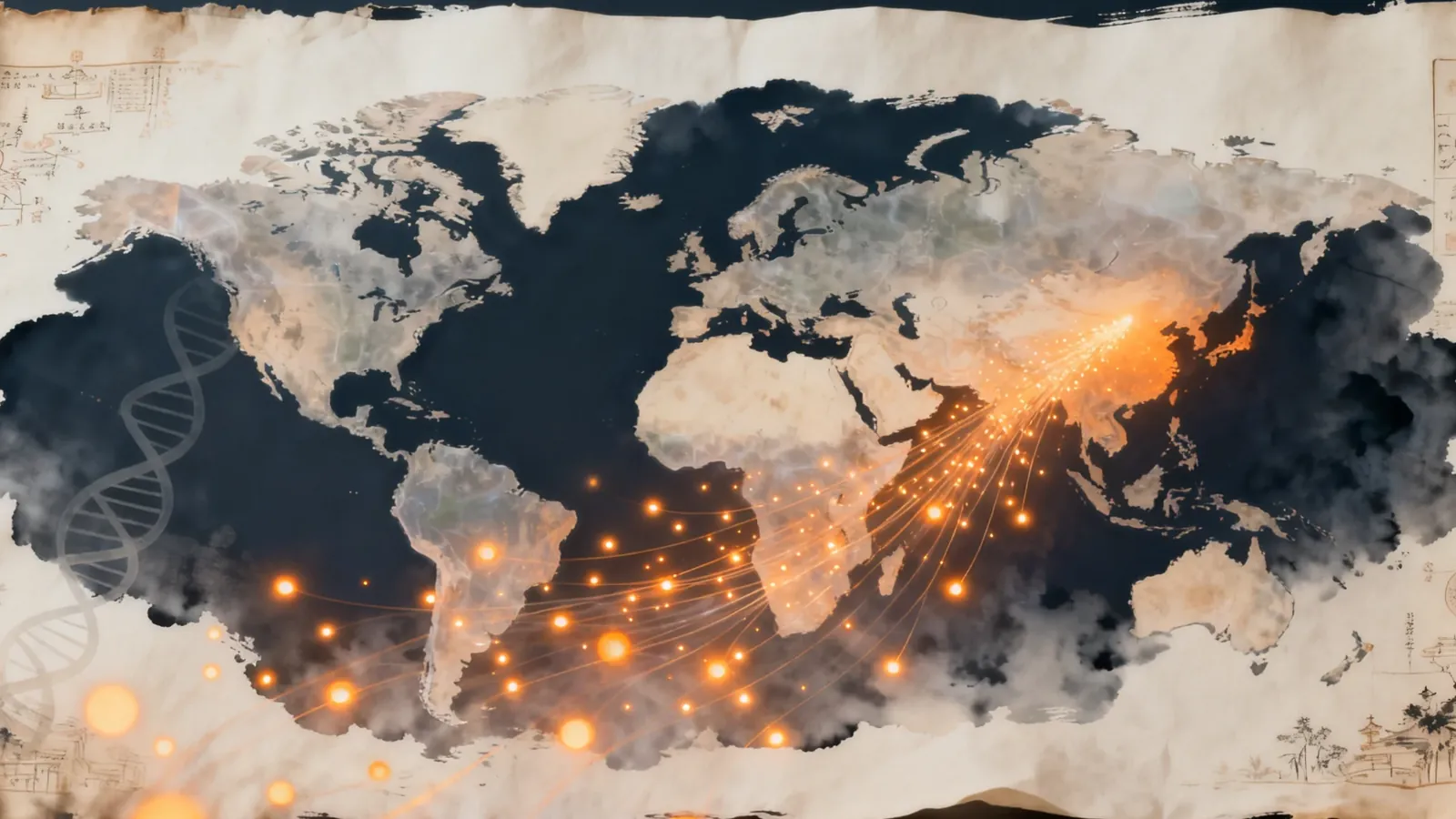
1. Why Do Overseas Chinese Seek Roots?
Motivations vary, but typically include:
| Motivation | Manifestation | Typical Group |
|---|---|---|
| Identity | “Who am I, where do I come from” | Second, third generation Chinese |
| Family reunion | Want to contact relatives in China | Long-separated families |
| Property inheritance | Ancestral homes, properties in China | Legal affairs |
| Historical tracing | Want to know ancestors’ stories | History enthusiasts |
| Emotional sustenance | Parents’ wishes | Families where elders have passed |
| Business cooperation | Want to establish ties with same clan | Business, clan association activities |
Regardless of motivation, roots seeking is an exploration of “who am I” — significant.
2. Preparation Before Seeking Roots
Don’t rush. Do your homework first.
Information Checklist (Collect First)
| Information Type | Content | Source |
|---|---|---|
| Family oral accounts | Parents’ memories of hometown | Parents, uncles, elders interviews |
| Written materials | Old passports, family letters, photos, documents | Family archives |
| Key information | Ancestors’ names, original home (precise to county/town/village) | Household registration, family tree |
| Time nodes | Emigration time, return visits | Old passports, family letters |
| Other clues | Same-hometown associations, clan association info | Parents’ social networks |
Notes
- Record dialect place names in original sound: Many place names are only accurate in dialect; Mandarin translation may be completely different
- Don’t trust single sources: Verify information from at least 3 independent sources
- Start with elders: Parents, uncles are first-hand sources, but they also age
- Record in detail: Include ancestors’ native place, birth year, emigration time, reasons
3. Five Main Roots-Seeking Paths
Path 1: Through Clan Associations
Clan associations are the most direct channel for overseas Chinese roots seeking.
| Region | Main Clan Association | Contact |
|---|---|---|
| Global | World Zhi De Clan Federation | Global Wu clan |
| Global | World Hakka Federation | Global Hakka |
| Global | World Fuzhou Shiyi Tongxiang Federation | Fuzhou Chinese |
| Southeast Asia | Malaysia surname clan associations | Nearly all major surnames |
| North America | American Chinese clan associations | Multiple cities have branches |
Advantages of clan associations:
- Already have same-surname clan member databases
- Can directly contact domestic counterpart clan associations
- Often organize return-home ancestor worship activities
How to contact:
- Google search “[surname] + clan association + [country]”
- Ask local Chinese community organizations
- Search through FamilySearch and other platforms
Path 2: Through Local Overseas Chinese Affairs Offices
Every province, city, and county in China has an Overseas Chinese Affairs Office, specifically handling overseas Chinese roots seeking.
| Level | Institution | Function |
|---|---|---|
| Central | State Council Overseas Chinese Affairs Office | Macro policy |
| Provincial | Provincial Overseas Chinese Affairs Office | Provincial contact |
| City | City Overseas Chinese Affairs Office | City-level contact |
| County | County Overseas Chinese Affairs Office | County-level contact |
| Town | Town Overseas Chinese Federation | Direct landing |
How to find:
- Know ancestors’ original home → find corresponding county overseas Chinese affairs office
- County office can directly check surname distribution in that county
- County office can help contact village committees, clans
Typical case:
A Malaysian Chinese wanted to find his ancestors’ hometown in Yongding County, Fujian. Through the county overseas Chinese affairs office, he contacted the local town overseas Chinese federation, finding his ancestors’ old home and paternal cousins within 3 months.
Path 3: Family Tree Databases
Domestic and international family tree databases are another important resource.
Major Domestic Databases
| Platform | Content | URL |
|---|---|---|
| Shanghai Library Family Tree Collection | 12,000 family tree directory | library.sh.cn |
| National Library | Ancient family tree digitization | nlc.cn |
| Zhongjiapu.com | Folk family tree database | zhongjiapu.com |
| Provincial and Municipal Archives | Local family trees | Provincial archives |
Major International Databases
| Platform | Content | URL |
|---|---|---|
| FamilySearch | World’s largest, free | familysearch.org |
| Ancestry | Commercial, world’s largest | ancestry.com |
| MyHeritage | Automatic matching | myheritage.com |
| FindMyPast | UK-focused | findmypast.com |
| WikiTree | Collaborative platform | wikitree.com |
Usage tips:
- Search first by pinyin + Chinese surname
- County place names need multiple spelling variations (e.g., “Yongding” might be Yongding)
- FamilySearch allows free registration and free access to large resources
Path 4: DNA Testing
DNA testing is a new 21st century roots-seeking tool, solving the “document gap” problem.
| Test Type | Best For | Interpretation |
|---|---|---|
| Y-DNA | Males | Paternal lineage, surname tracing |
| mtDNA | All | Maternal lineage |
| Whole Genome (autosomal) | All | Comprehensive lineage, relative matching |
Major Service Providers:
| Provider | Features | Best For |
|---|---|---|
| 23andMe | Comprehensive reports | North American Chinese |
| AncestryDNA | Strong relative matching | Finding lost relatives |
| MyHeritage DNA | Strong European data | European Chinese |
| WeGene | Strong Chinese database | China/Southeast Asian Chinese |
| 23Mofang | China-localized | China/Southeast Asian Chinese |
Typical case:
A third-generation American Chinese matched with a distant cousin in Zhongshan, Guangdong through AncestryDNA. Through this cousin, he found his ancestors’ old home and genealogy, completing a generations-long roots-seeking journey.
Path 5: Field Visits
This is the most traditional and in-depth roots-seeking method.
Process
| Stage | Task | Time |
|---|---|---|
| 1. Pre-trip preparation | Confirm hometown address, prepare gifts | 1-2 months |
| 2. Local contact | Contact county/town overseas Chinese office, village committee | Before arrival |
| 3. Field visit | See ancestral home, ancestral tomb, ancestral hall | 3-7 days |
| 4. Data collection | Old genealogies, photos, oral accounts | Continuous |
| 5. Follow-up contact | Maintain contact with local relatives | Long-term |
Field Visit Checklist
- Parents’ hometown address (precise to natural village)
- Parents’ names (former names, courtesy names, style names)
- Parents’ birth year, year of leaving home
- Prepare some hometown gifts (cigarettes and alcohol, tea, pastries, etc.)
- Prepare family photo copies
- Contact local overseas Chinese office in advance
- Invite a translator who speaks the local dialect (if you don’t)
Notes
- Respect local customs
- Don’t visit empty-handed
- Gifts for elders are more appropriate than money
- Be prepared to accept “may have unexpected results”
4. Three Major Hometown Case Studies: Fujian, Guangdong, Hainan
Case 1: Fujian Hometowns — Minnan and Fuzhou Focus
Features: Fujian is one of the most important ancestral homes for overseas Chinese.
| Region | Main Overseas Distribution | Main Surnames |
|---|---|---|
| Minnan (Quanzhou, Xiamen, Zhangzhou) | Philippines, Malaysia, Singapore, Indonesia | Chen, Lin, Huang, Li, Wu |
| Fuzhou | USA, Canada, Southeast Asia | Lin, Chen, Huang, Zheng, Wang |
| Hakka regions (Yongding, Shanghang) | Southeast Asia, North America | Zhang, Qiu, Liu, Zhong |
Fujian roots-seeking advantages:
- Most complete preservation of Fujian clan culture
- Famous hometown of overseas Chinese, many returnees
- Experienced local overseas Chinese affairs offices
Case 2: Guangdong Hometowns — Guangfu and Chaoshan Focus
Features: Guangdong is the largest hometown of overseas Chinese.
| Region | Main Overseas Distribution | Main Surnames |
|---|---|---|
| Guangfu (Guangzhou, Foshan, Zhongshan) | North America, Australia, Southeast Asia | Huang, Liang, Chen, Li |
| Chaoshan (Shantou, Chaozhou, Jieyang) | Thailand, Malaysia, Singapore, Hong Kong | Chen, Lin, Huang, Cai |
| Hakka (Meizhou, Huizhou) | Southeast Asia, North America | Zhang, Liu, Qiu, Zhong |
Guangdong roots-seeking advantages:
- Worldwide distribution, well-developed clan association networks
- Complete preservation of Guangfu and Chaoshan dialects
- Hong Kong/Macau serve as intermediate bridges
Case 3: Hainan Hometowns — Qionghai, Wenchang Focus
Features: Hainan Chinese are mainly concentrated in Southeast Asia.
| Region | Main Overseas Distribution | Main Surnames |
|---|---|---|
| Qionghai, Wenchang | Thailand, Malaysia, Singapore | Zhou, Wang, Chen, Fu |
Hainan roots-seeking features:
- Hainanese preserved completely, similar to Minnan
- Hainan Chinese mainly in Thailand, the second largest Thai Chinese group
- Ancestral hall culture preserved completely
5. Cross-National Family Tree Organization Recommendations
After successful roots seeking, how to integrate cross-national family information into one family tree?
Organization Principles
| Principle | Method |
|---|---|
| Multilingual | Chinese-English bilingual (or other languages) |
| Multi-location nodes | Mark each member’s actual country of residence |
| Clear timeline | Mark migration/return times |
| Parallel generations | Parallel record overseas and domestic branches |
| Cultural notes | Explain special overseas Chinese terminology |
Recommended Family Tree Structure
Family Master Tree
├── Founding ancestor to grandfather generation (domestic)
├── Parent generation (domestic → overseas)
├── Overseas branches
│   ├── North American branch
│   ├── Southeast Asian branch
│   └── European branch
├── Modern family members (global distribution)
└── Appendix: Family chronicles, family photos, family stories
Frequently Asked Questions (FAQ)
Q1: How Long Does Roots-Seeking Take?
Depends on the situation. Simple cases: 1-3 months; complex cases (family separated for generations): 1-2 years.
Q2: How Much Does Roots-Seeking Cost?
| Path | Approximate Cost |
|---|---|
| Clan association contact | Basically free |
| Overseas Chinese affairs office inquiry | Free |
| Database query | Partially free, partially subscription |
| DNA testing | $100-500 USD |
| Field visit | Thousands to tens of thousands RMB (including flights, accommodation, gifts) |
Q3: Can DNA Testing Solve Everything?
No. DNA testing is mainly for relative matching and lineage tracing, it cannot replace document research and field visits. Best practice is combining all three.
Q4: What If Roots-Seeking Fails?
Accept the regret. Many families truly cannot be fully traced due to wars, migrations, political movements. What matters is that you tried — even if you only found partial information, it’s a contribution to the family.
Q5: What Should I Do After Finding My Ancestral Hometown?
- Visit relatives: Bring gifts, be sincere
- Record information: Photograph, video, take notes
- Continue genealogy: Enter ancestors’ information into new genealogy
- Stay in touch: Establish long-term contact with domestic relatives
- Give back: Appropriately give back to hometown (such as funding education, infrastructure)
Conclusion
Roots seeking isn’t just “finding ancestral home” — it’s an exploration of “who am I.”
Even if you ultimately don’t find your ancestors’ hometown, the exploration itself already answers “who am I” — you are a person with roots, your roots are in the long river of history.
This root will help you stand firmer in a foreign land.
Further Reading:
- 📜 Family Trees and Clan Genealogy: A Three-Thousand-Year Cultural Code
- 📚 From Rites of Zhou to the AI Era: The Evolution of Chinese Genealogy
- 💻 Start Making Your Family Tree: Family Tree Design Software
This article was written by Tool Person Zhang Wei. Please cite the original source: https://familytree.design.