
Last Qingming Festival, I went back to my hometown. My grandmother pointed at a faded portrait on the ancestral hall wall and said, “This is your great-great-grandfather. He was a scholar.”
I froze. Over twenty years alive, and I had no idea there was a scholar in the family.
She went on with names and stories. I didn’t write any of it down. When I got home, all I could remember was “scholar.” Everything else was gone.
I still regret that.
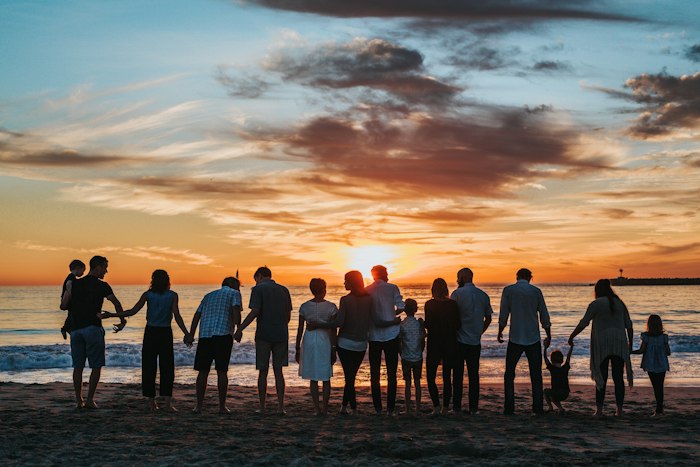
Most people know almost nothing about their own family
Try this: What’s your grandfather’s full name? When was he born? What did he do when he was young? Where was your grandmother from?
If you can answer all of these, you’re doing better than me. I asked a dozen friends. Most couldn’t answer completely. Some didn’t even know their grandparents’ full names.
It’s not about being disrespectful. Nobody ever brought it up. Kids who grow up in cities have weak ties to their parents’ hometowns. The older generation was too busy making a living to tell stories. By the time we want to ask, the people who knew may already be gone.
What’s the point of a family tree?
I used to think genealogy was just those scrolls hanging in rural ancestral halls — nothing to do with me. Then I started building my own family tree. My thinking changed.
First, it helps you remember things that disappear. Names, birthdays, birthplaces, who’s related to whom — if this isn’t in the household registration book, nobody records it. My grandmother’s family was from rural Hunan. She left as a child during a famine. Nobody can say exactly which village, which year, or who else was there. After she passed, that information was gone for good.
Second, you notice patterns you didn’t expect. While working on my tree, I realized three generations on my father’s side all worked with words: my great-grandfather was a private tutor, my grandfather set type at a newspaper, my father taught Chinese. My own work involves writing too. Seeing that thread felt strange, in a good way.
Third, health information is actually useful. My aunt has diabetes. I noted it down while collecting family info. Later I found out several people in my grandfather’s generation also had blood sugar problems. That’s relevant to my own health.

Why don’t most people start?
I’ve asked around. The reasons are always the same:
- “I don’t know where to begin.”
- “I’ll do it when I have time.”
- “It feels awkward to ask old people.”
- “I’m afraid I won’t remember the answers.”
I get all of these. But honestly, “later” is a dangerous word. My friend’s grandmother passed last year. She had said many times she wanted to visit her hometown. She never made the trip. Now there’s no one to ask for directions.
You don’t have to finish it all at once
A lot of people think building a family tree is a massive project, like compiling a county chronicle. It’s not.
Start with what you already know. Your own name, birthday, birthplace. Your parents’. Your grandparents’. Write down whatever comes to mind.
Ask your parents casually. You don’t need to call home for a formal “interview.” Just ask over dinner — “What did grandpa do for work?” — and the conversation flows naturally. Old people talk more when it doesn’t feel like an interrogation.
Take photos of old pictures. Most families have photo albums nobody looks at. Snap a photo with your phone and ask, “Who is this?” The stories behind the photos are often worth more than the images themselves.
Build a family tree on your phone. There are tools that make this much easier than drawing by hand. Fill in your generation and your parents’ first. Add more over time.
The format doesn’t matter
People ask me: What format should a family tree use? Do I need to follow the traditional vertical layout?
My answer: the format doesn’t matter. Recording it matters.
A handwritten notebook works. A spreadsheet works. A genealogy app works. Even a note in your phone’s memo app with a few names and birthdays is infinitely better than nothing.
I know someone who drew a simple family tree on a sheet of A4 paper and stuck it on the fridge. Every time a relative visited, they’d ask a question and add a new entry. After a few years, they had five generations mapped out.
About the word “legacy”
I don’t want to lecture anyone about “preserving family culture” or “continuing bloodline heritage.” Those phrases aren’t wrong, but they’re too abstract.
The most practical reason to build a family tree is simple: so the people who come after you won’t have to stare blankly at a portrait like I did.
If I had started ten years earlier, I wouldn’t be left with just the word “scholar.” I’d know my great-great-grandfather’s name, what books he read, which students he taught, and where he was buried.
That information isn’t valuable in any monetary sense. But once it’s lost, it’s gone.
One last thing
While writing this, I went through the family information on my phone. It’s still incomplete, but way better than a year ago. At least now I know my great-grandfather’s name.
If you’re on the fence about starting — stop thinking and just do it. Even writing down one name today is a step forward.
Interested in making a family tree? Check out our Family Tree Design software — it supports visual family trees, AI-powered analysis, and more. Free 7-day trial available.