Family Tree Views · 065 / 9

Bow-tie Chart

Both sides of a marriage, centred on the couple

← Back to Family Tree Views

Where the name comes from

The bow-tie chart centres on a married couple: the husband ancestry expands up and to the left, the wife ancestry up and to the right. The symmetrical shape resembles a bow tie or butterfly wings, hence the English name bow-tie chart.
What it is for

It is built for one question: how did two families join? Both ancestries share a single chart, which makes it especially clear for weddings, merging two family trees, and studying in-law relationships.

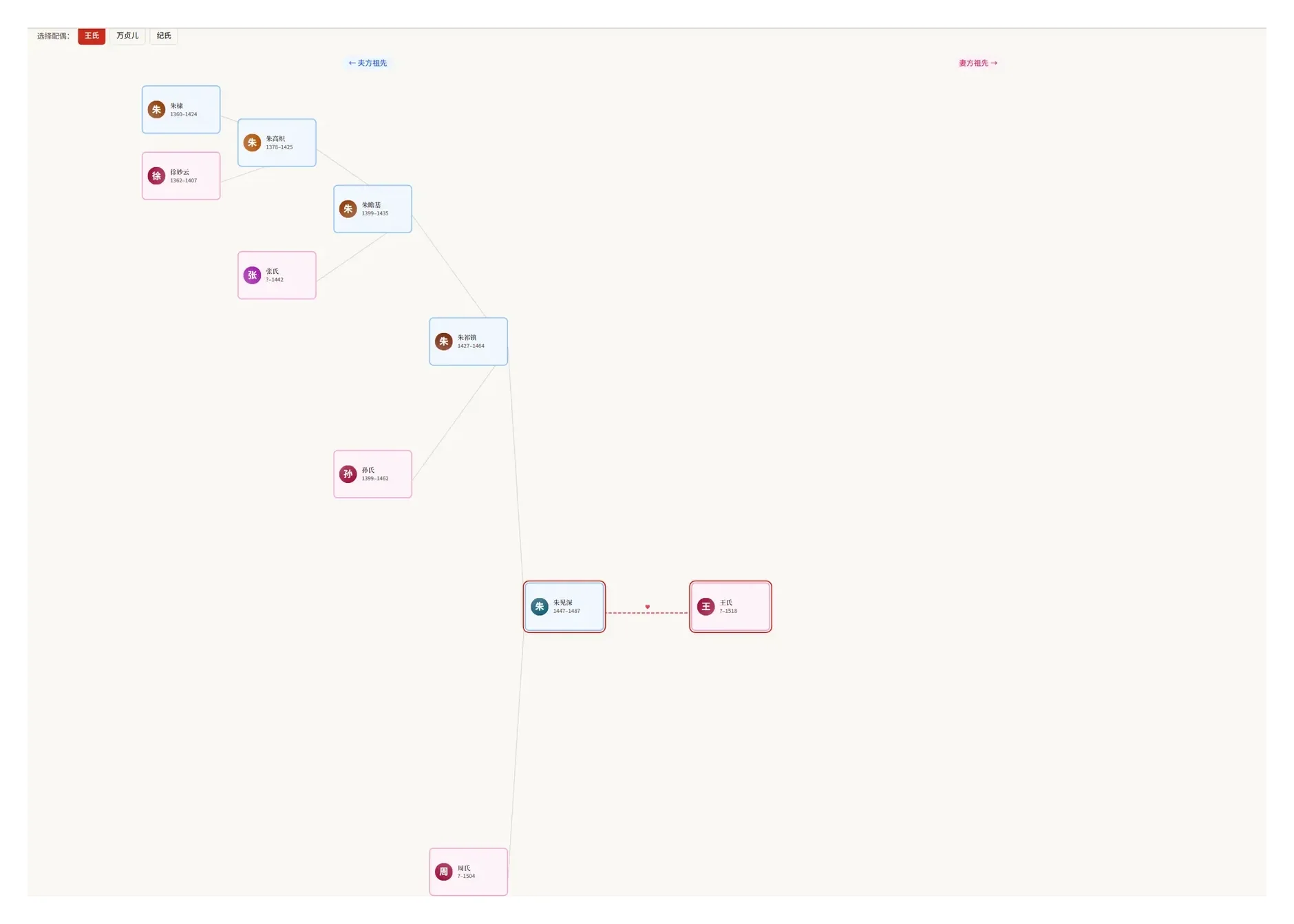
Bow-tie chart example: a couple in the centre with the husband and wife ancestors spreading to either side
Example: the Zhu family across twelve generations (official demo data)View full size ↗Rendered by the real product component with official demo data; no real user information is included.

How to read it

  1. The couple in the middle is joined by a ♥; the husband is on the left, the wife on the right.

  2. The upper-left label reads "← Husband ancestors" and the upper-right "Wife ancestors →", each expanding generation by generation.

  3. The "Select spouse" control at the top switches between a person several spouses, one bow-tie at a time.

  4. The two wings are symmetrical only when both ancestries are complete; the demo data records the main line, so the wife side is thinner.

How to open it in the app

Family Tree view"Bow-tie Chart" in the top barSelect a member with a spouseSwitch spouses at the top

For a balanced bow-tie, fill in both sets of parents and grandparents first — the more complete the data, the more even the wings.

Best used for

  • Wedding displays
  • Two-family research
  • Merging family trees
  • In-law relationships

Tip:The chart will not invent missing ancestors: an empty wing usually means those generations have not been entered yet.